Zhongji Health's Bulk Tomato Paste Inventory Clearance: More Sales, More Losses
Zhongji Health Resumes Trading After ST Removal: Bulk Tomato Paste Inventory Sales Surge but Gross Margin Still Negative
Blue Whale News, June 29 (Reporter Dai Ziting) On June 29, Zhongji Health resumed trading with its ST label removed, changing its stock name from "*ST Zhongji" to "Zhongji Health." On the first day, as of press time, the stock was trading at 3.29 yuan per share, up 2.17% from the June 25 close of 3.22 yuan.
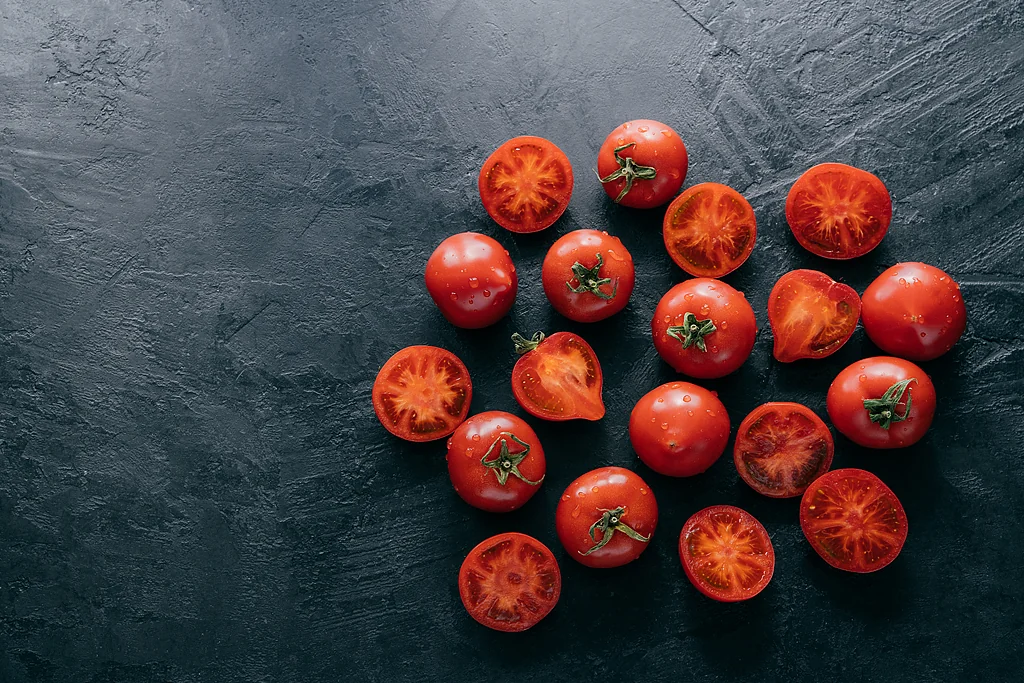
Zhongji Health, based in Wujiaqu, Xinjiang, mainly produces tomato products, including bulk tomato paste, small-pack tomato products, and lycopene softgels. The company's main revenue comes from bulk tomato paste, serving as a basic ingredient in food processing and food service supply chains, primarily targeting B-end customers.
In 2025, Zhongji Health crossed two financial thresholds for removing the delisting risk warning: first, the equity attributable to the parent company turned positive, reaching 26.1223 million yuan at year-end; second, revenue after deductions reached 488 million yuan, exceeding the 300 million yuan threshold. However, the company still reported a net loss of 46.2318 million yuan in 2025, with non-recurring losses of 293 million yuan, indicating main business profitability has not yet recovered.
Inventory Clearance Drives Revenue Above Threshold: Sales of 132,100 Tons, Production of Only 7,500 Tons
Behind the revenue threshold was a clear inventory clearance: production cut, inventory decline, and sales increase. The annual report shows that in 2025, bulk tomato paste revenue was 448 million yuan, accounting for 91.12% of total revenue; sales volume was 132,100 tons, up 249.47% YoY. Correspondingly, production of bulk tomato paste that year was only 7,500 tons, down 95.61% YoY; inventory fell to 91,000 tons, down 57.80%.
But this was not a profitable business. Corrected data show that in 2025, the gross margin of bulk tomato paste was -20.41%, and the company's overall gross margin was -15.66%. In other words, the main business had negative gross margin, and it accounted for over 90% of revenue.
Reasons for Selling at a Loss: Price Decline and Shelf-Life Pressure
The company's annual report and reply to inquiry letters pointed to two core pressures: price and shelf life.
First, price. The company stated in its reply that in 2025, the average export price of Chinese tomato paste (above 5kg) fell to $675/ton, down 32.5% from $1,000/ton in 2024, a multi-year low. Domestic bulk tomato paste prices also remained weak, with high industry inventory and some companies dumping at low prices, further driving down prices.
Blue Whale reporters reviewing annual report data found that the unit selling price of bulk tomato paste fell from 7,857.91 yuan/ton in 2023 to 5,866.22 yuan/ton in 2024, and further to 3,395.43 yuan/ton in 2025. The company said the decrease in selling prices was greater than the decrease in costs, leading to "more sales, more losses."
Second, shelf life. The annual report disclosed that the shelf life of bulk tomato paste is 720 days (two years). The company said that based on actual market sales of tomato products, product prices decline nonlinearly as shelf life approaches, with the sharpest drop near expiration. Given sharply reduced international orders, near-saturation domestic market, and increasing shelf-life pressure, the company needed to boost sales, but selling prices continued to fall, resulting in inverted production and sales prices.
ST Removal Does Not Mean Risk Cleared: High Debt Ratio and Pre-Reorganization
From a business perspective, selling at a loss is not ideal but may be the more realistic choice: not selling will continue to tie up capital and risk further price depreciation, impairment, or expiration; selling can relieve cash flow and inventory pressure, but profits remain under pressure.
However, ST removal does not mean risks are cleared. In 2025, the company's debt ratio was still as high as 97.79%, and the company and its wholly-owned subsidiary Red Tomato have entered pre-reorganization procedures.
According to disclosures, in July 2025, Zhuo Xin Zhong Yuan Certified Public Accountants (special general partnership), a creditor of Zhongji Health, filed an application with the court for reorganization and pre-reorganization on the grounds that the company was unable to pay its due debts and clearly lacked solvency but had reorganization value. On the same day, Xinjiang Hengyuan Water Co., Ltd. also filed a similar application for the reorganization and pre-reorganization of Red Tomato.
The company said it is working with the interim administrator under court supervision to advance matters such as creditor claims review, audit, and evaluation. However, pre-reorganization does not equal formal court acceptance of reorganization. If the court later rules to accept reorganization, the stock may face an additional delisting risk warning; if reorganization fails and bankruptcy is declared, the stock faces termination of listing risk.
In the first quarter of 2026, Zhongji Health achieved revenue of 54.8219 million yuan, down 30.33% YoY; net loss attributable to parent was 19.6295 million yuan, compared to a loss of 7.2557 million yuan in the same period last year; non-recurring loss was 20.5002 million yuan. By end of the first quarter, equity attributable to the parent company had fallen to 6.4928 million yuan, down 75.14% from 26.1223 million yuan at end-2025.
For Zhongji Health, resuming trading is only a temporary exit from the "*ST" label. The key remains: when 90% of revenue comes from bulk tomato paste with negative gross margin, what will the company rely on to make money after inventory clearance?

Disclaimer: This article is for reference only and does not constitute investment advice. Investment involves risks, please invest cautiously.
Related Reading
Hong Kong-Listed Shipping Companies' Quarterly Report Analysis: Q3 Earnings Disclosure Window Opens — Four Key Dimensions to Break Down Shipping Stocks' Earnings Quality
2026-10-26
Hong Kong Stock Individual Stock Volatility Analysis: In-depth Analysis of Capital Flow Towards Hot Sectors in September 2026
2026-09-28
BDI Index Reaches New High, Shipping Sector in Hong Kong Stocks Leads Rally, In-depth Analysis of Investment Opportunities
2026-08-19