Will self-service hotpot with shrimp paste become the next all-you-can-eat beef rib trend?
Will the RMB 59-per-person shrimp paste all-you-can-eat hotpot become the next "all-you-can-eat beef rib"?
RMB 59 per person shrimp paste buffet — have young people in smaller cities already achieved "shrimp paste freedom"?
When I went back home recently, I noticed that a second-tier city in Hebei had actually opened several "shrimp paste buffet hotpot" stores.
Compared with a normal hotpot buffet, this is basically a "shrimp paste museum": from original shrimp paste to roe shrimp paste, shiitake shrimp paste, squid shrimp paste, and even dragon-fruit shrimp paste — as many as a dozen varieties.

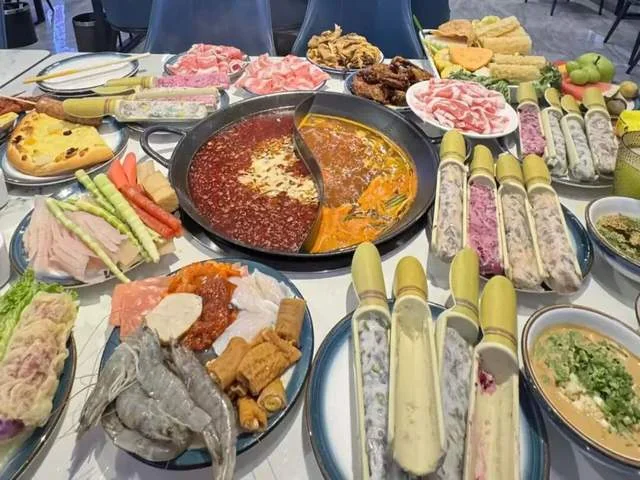
Besides shrimp paste, the shop also offers chicken paste, beef paste, fish paste, and other "paste derivatives," all placed in bamboo-tube-style containers lined up neatly in the refrigerated case, quite a sight.
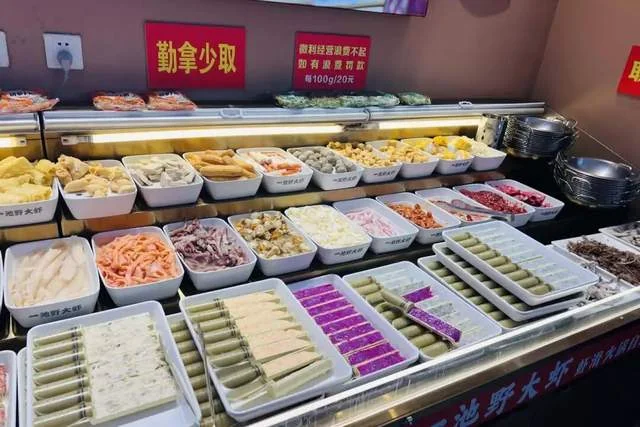
Along with shrimp paste, the store also has beef, lamb, vegetables, mushrooms, and the usual hotpot items. Desserts, drinks, and shaved-ice-style snacks are all there too, and some stores even add pizza and other staple foods.
Of course, most customers come for "shrimp paste freedom."
In fact, over the past year, a batch of chain shrimp-paste buffet hotpot brands has emerged in Hebei alone, and some have even expanded beyond the province.
For example, Shijiazhuang's Cijie Handmade Shrimp Paste Buffet Old Hotpot, founded last year, has already opened 66 stores across Shandong, Jilin, Jiangsu, and other places; another Hebei-born brand, Chengke North Shrimp Paste Buffet Old Hotpot, founded around the same time, has opened nearly 40 stores in Hebei, Shanxi, Heilongjiang, and Jilin.
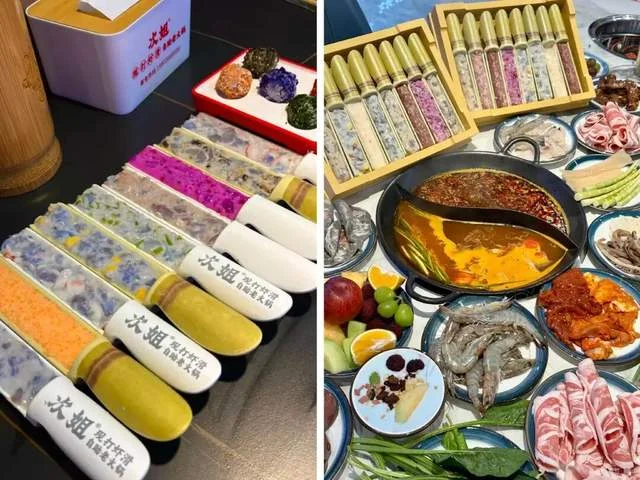
Jianglaolao Shrimp Paste Seafood Buffet Hotpot, which opened its first store in Zhejiang, now spans 12 provinces nationwide and opened 20 new stores this year alone. Laoxiaoxian Shrimp Paste Seafood Buffet Hotpot, founded in 2018, also accelerated expansion last year and has opened 40 new stores since 2025.
The trend is so hot that it has even spread to South Korea. Recently, a netizen posted that South Korea now also has shrimp-paste buffet hotpot, with the same bamboo-tube-and-shrimp-paste setup as in China.

Why shrimp paste?
There are many reasons why shrimp-paste buffet hotpot is rising.
For one, shrimp paste's use value in dining is expanding rapidly, and it has long been a classic flagship item in the hotpot sector.
According to data from the offline retail monitoring network, shrimp-paste category sales in 2025 rose 56.9% year on year, while sales volume increased 60.6%, making it the fastest-growing subcategory in frozen food.
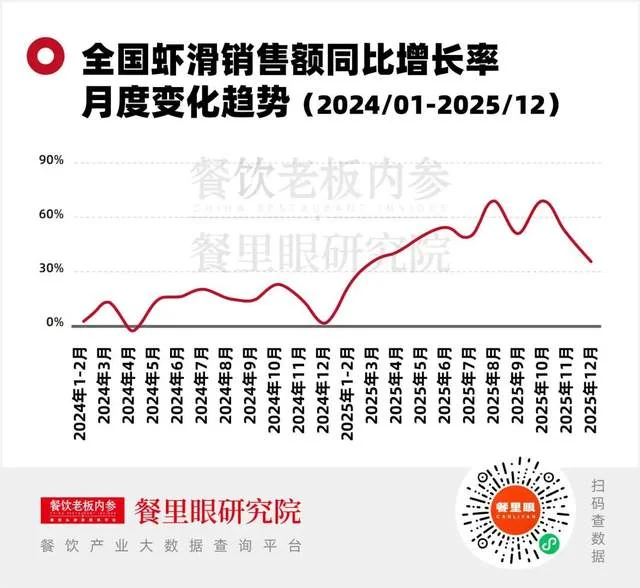
In Zhejiang, Jiangsu, Anhui, Hunan, and Guizhou, shrimp paste even made a comeback and overtook beef balls to become the No. 1 hotpot ball item.
Another reason is that shrimp paste naturally feels premium, which matches consumers' expectation of "getting their money's worth."
Although very popular, this frozen-food dark horse is not cheap. Take Haidilao as an example: a serving of its signature jumbo-grain shrimp paste (about 140g) costs RMB 74. Even at a supermarket, a pack of Anjoy shrimp paste can cost RMB 16.5 per 150g.
So if you eat a few servings of shrimp paste at a buffet hotpot restaurant, the RMB 59 ticket price can be easily offset. Add a few more dishes, and you can "make back your money," which is very tempting.
Most importantly, the upstream shrimp-paste supply chain is getting stronger, with production technology and output both increasing.
Take Daxiajie as an example. It focuses on shrimp paste as a single category and led the drafting of the group standard for Shrimp Paste in 2023 and the national standard for Frozen Shrimp Paste in 2024. It now achieves monthly sales above 100 million yuan and annual revenue above 1 billion yuan.
For catering, especially the hotpot sector, the upstream supply chain is the core lifeline for reducing costs and ensuring quality. The rise of this shrimp-paste supply chain has also created an opening for shrimp-paste buffet hotpot.

Will shrimp-paste buffet hotpot become the next beef-rib trend?
According to Chenzhi Big Data, over the past year the number of shrimp-paste buffet stores has grown rapidly from fewer than 10 to more than 500, and they are mainly concentrated in lower-tier markets.
Building differentiation with a single-item buffet model and opening stores quickly over a short period inevitably reminds people of the similar "beef-rib buffet" trend.
The latter rose quickly in the second half of 2024 and then closed in batches in early 2025; some merchants even lost more than RMB 2 million within just three months.
Of course, unlike beef ribs, which were opened because beef prices fell and later shut down when beef prices rose, shrimp paste's cost is relatively controllable, and the development of the upstream supply chain has also strengthened the foundation of the category.
Still, it is worth noting that ingredient cost can only be the "last straw" on beef-rib buffet operators.
Another major reason for their decline was that most stores merely piggybacked on the viral "beef rib" trend without turning category popularity into brand repeat purchases, and ultimately had to exit a highly homogenized market.
For these emerging shrimp-paste buffet hotpot brands, challenges around brand differentiation, product innovation, and store operations still remain. Whether they can scale sustainably is still something to watch.

Disclaimer: This article is for reference only and does not constitute investment advice. Investment involves risks, please invest cautiously.
Related Reading
港股即时看:油运股旺季窗口开启,VLCC运价、油价结构与盘面联动的三线盯盘法
2026-10-28
Hong Kong Stocks Live: Frequent Intraday Swings in Shipping Stocks — A Triple Verification Framework to Help You Identify Real Breakouts vs. Fake Rallies
2026-10-27
Hong Kong Stock Instant View: Why are Hong Kong Stocks the "Slow Variables" on the Shipping Chain? Full Analysis of Three Monitoring Signals and Allocation Logic
2026-10-23