Understanding the Stock Connect Eligible Stock List: Why This List Holds the Core Advantages of Trading Hong Kong Stocks
For many mainland investors, the first reaction to the term trading Hong Kong stocks is often the difficulty of opening an account and unfamiliar rules. Few people notice, however, that the authorities have long provided a “core asset guide”—the Stock Connect eligible stock list. Reading this dynamically updated list not only helps you quickly lock onto quality stocks in the Hong Kong market, but also reveals where the true appeal of Hong Kong stock investment lies.
The Stock Connect Eligible Stock List: A Dynamically Updated “Core Asset Pool”
Stock Connect eligible stocks refer to the range of Hong Kong stocks that mainland investors can buy and sell directly through the Shanghai-Hong Kong and Shenzhen-Hong Kong Stock Connect channels. Rather than covering all 2,000-plus Hong Kong stocks, the list consists of constituents of the Hang Seng Composite LargeCap Index, constituents of the Hang Seng Composite MidCap Index, small-cap index constituents meeting market cap requirements, plus the H shares of all A+H listed companies—around 500 stocks in total—yet they account for the vast majority of Hong Kong market capitalization and turnover.
More importantly, the list is not set in stone. HKEX regularly adjusts index constituents, and newly listed companies can be quickly included after some time on the market once they meet market cap and liquidity requirements. After Hong Kong allowed companies with weighted voting rights structures to list in 2018 and relaxed secondary listing conditions for Greater China innovative companies, many new-economy giants entered the Stock Connect list through this path. In other words, this list is itself a condensed history of Hong Kong market reform.
Three Types of “Scarce Assets” on the List
Why trade Hong Kong stocks? The answer is largely written in this list. Broken down, Stock Connect eligible stocks roughly correspond to three types of assets that are hard to replace in the A-share market.
Type 1: Internet and Tech Platform Leaders
Tencent, Meituan, Xiaomi, Kuaishou, and other representative Chinese internet companies have all listed in Hong Kong or completed dual primary listings. These companies are the biggest beneficiaries of China's digital economy over the past decade, yet not one of them appears in the A-share market. For investors who want to “buy into the Chinese internet,” Hong Kong is almost the only gateway, and the launch of the Hang Seng TECH Index has packaged these platform-economy leaders into a core gauge of new-economy sentiment.
Type 2: Innovative Drug and Biotech Companies
In 2018, HKEX launched the Chapter 18A listing regime, allowing pre-profit biotech companies to go public, making Hong Kong a hub for mainland innovative drug developers. With heavy R&D spending and long payback periods, such companies long struggled to enter the capital market under the original A-share listing standards. Hong Kong opened a financing channel for them and gave investors scarce exposure to the innovative drug industry chain.
Type 3: High-Dividend Blue Chips and Energy/Resources Stocks
The Hong Kong market has always been a paradise for value investors. Blue chips in traditional sectors such as banks, telecom, energy, and utilities have long traded at lower valuations than comparable A-share companies, with generally more attractive dividend yields. Against the backdrop of declining risk-free rates on the mainland, the allocation value of these “bond-like” assets has been repeatedly validated by Southbound capital—one of the main directions of Southbound net inflows in recent years has been exactly the high-dividend sector.
Flexibility and “Discount” Opportunities from Rule Differences
Beyond the stocks themselves, Hong Kong's trading rules are another key reason many choose to invest southbound:
- T+0 intraday trading: Stocks bought today can be sold the same day, with far higher capital efficiency than the A-share T+1 rule;
- No price limits: More complete price discovery, with good and bad news priced in at once, but also greater volatility risk;
- Rich derivatives: Products such as CBBCs and warrants offer more tools for risk management;
- AH premium: For the same company, H shares have long traded at a discount to A shares, giving long-term investors the chance to “buy the same asset at a discount.”
A reminder, though: flexibility is a double-edged sword. No price limits mean daily swings can far exceed A-share investors' expectations—which is exactly why Stock Connect sets an RMB 500,000 asset threshold and requires investors to have matching risk tolerance.
Southbound Capital: From Participant to Price-Setter
In the decade-plus since Stock Connect launched, Southbound capital's role has changed qualitatively. Once a supplementary force in the Hong Kong market, its share of overall Hong Kong market turnover has stabilized at double-digit levels, and the total market value of Hong Kong stocks held by Southbound capital keeps climbing. Mainland money has become a pivotal force in Hong Kong's pricing system.
This shift has three direct implications for ordinary investors: First, liquidity of Stock Connect eligible stocks has improved markedly, reducing the market-impact cost of trading large-cap names; second, Southbound capital's preferences continually influence sector valuation centers, so tracking Stock Connect fund flows is itself an important dimension of HK stock research; third, as the Stock Connect list keeps expanding, the range of Hong Kong stocks accessible to mainland investors is approaching “full market” coverage.
Before You Start: Know These Differences
Having covered the advantages, the risks cannot be ignored. Investors planning to access Hong Kong stocks via Stock Connect should at least understand the following:
- Threshold and channels: Individual investors must hold total assets of no less than RMB 500,000 across their securities and capital accounts; Stock Connect currently does not support new-share subscriptions, so IPO participation requires a separate Hong Kong brokerage account;
- Exchange rate: Stock Connect settles in RMB but quotes in HKD, so exchange rate fluctuations between the two currencies affect actual returns;
- Dividend tax: Dividends received via Stock Connect are subject to 20% individual income tax, and some companies with red-chip structures bear even higher overall tax—factor this in when estimating high-dividend strategy returns;
- Trading mechanics: With no price limits in Hong Kong and insufficient liquidity in some small-cap stocks, blindly chasing volatile movers is significantly riskier than in A-shares.
Conclusion: Treat the List as a Starting Point, Not the Finish Line
Back to the original question—why trade Hong Kong stocks? The Stock Connect eligible stock list gives the most intuitive answer: here are tech giants and innovative drug makers unavailable in A-shares, high-dividend blue chips at a discount, more flexible trading rules, and a pricing system aligned with international standards yet deeply tied to Chinese assets. For mainland investors, it is both a natural choice for diversifying single-market risk and one of the lowest-threshold paths to global allocation.
Of course, the list is only a starting point. What truly determines investment outcomes is still research into individual fundamentals, tracking of fund flows and the currency environment, and strict position management. We suggest investors use real-time Hong Kong market tools to dynamically watch additions and removals of Stock Connect eligible stocks, their turnover share, and Southbound flow changes, gradually building a Hong Kong portfolio on a solid understanding of the rules. HK Clipper will continue to provide Hong Kong market barometer analysis and practical bootcamp content, accompanying investors as they take their first steady steps into southbound investing.
Disclaimer: This article is for reference only and does not constitute investment advice. Investment involves risks, please invest cautiously.
Related Reading
Five Core Differences Between Hong Kong Stocks and A-Shares: From Hang Seng Index Trends to Trading Rules, Understand Why to Trade Hong Kong Stocks
2026-10-21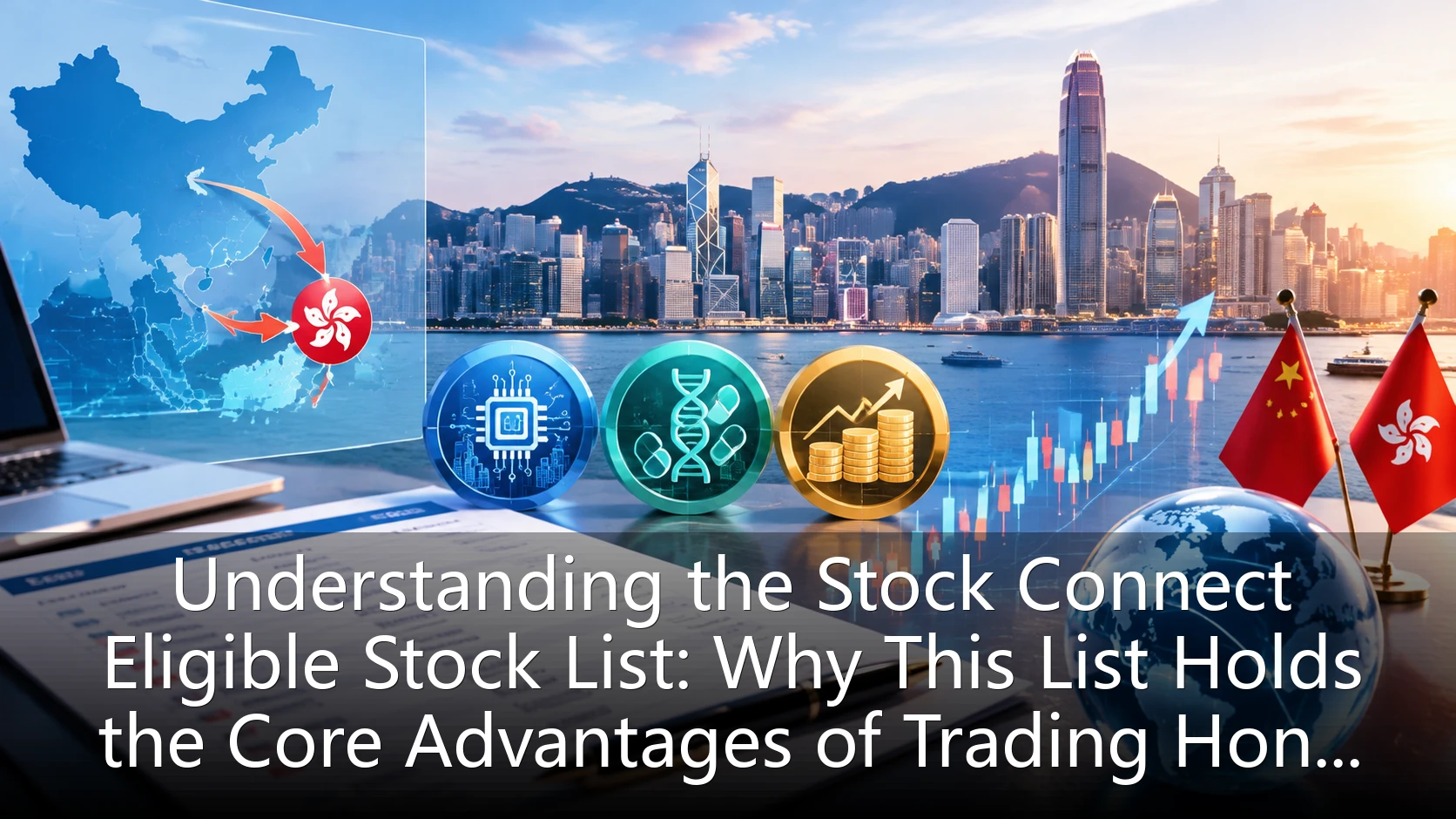
Understanding the Stock Connect Eligible Stock List: Why This List Holds the Core Advantages of Trading Hong Kong Stocks
2026-10-18
New Opportunities in HK Stock Investment: Why 2026 is Still the Golden Age for Trading HK Stocks?
2026-08-23