Eight years of northbound-southbound flows surpass one trillion: Stock Connect expansion accelerates — why do mainland investors view HK stocks as the 'first stop for going global'?
Stock Connect cumulative net buying exceeds one trillion; southbound capital sparks another allocation wave in August
As of early August 2026, despite intensified volatility in global capital markets driven by geopolitical tensions and Fed policy swings, the pace of mainland capital heading south has not slowed. Data shows that since the launch of the Shanghai-Hong Kong Stock Connect at the end of 2014, cumulative net buying by southbound capital has officially surpassed the HK$1 trillion mark. Behind this milestone lies not only mainland investors' recognition of the allocation value of the Hong Kong market, but also the fact that the connectivity mechanism has become the most convenient channel for residents' wealth to 'go global.'
Connectivity expands further: From 'optional' to 'standard' allocation
Looking back at the first half of 2026, the Stock Connect mechanism experienced several important expansions in eligible securities. As HKEX continues to ease thresholds for including pre-revenue biotech companies, specialist technology companies (Chapter 18C), and foreign companies into Stock Connect, the pool of targets accessible to mainland investors has expanded from traditional finance, real estate, and tech giants to AI hard tech, innovative drugs, and global consumer brands. For investors accustomed to seeking growth in the A-share market, Stock Connect fills some relative gaps in A-shares' new economy tracks. For example, many highly watched AI large-model application companies and humanoid robot supply chain leaders have chosen to list in Hong Kong, making Stock Connect the 'bridgehead' for mainland capital to capture dividends from China's new quality productive forces.
The dual temptation of valuation trough and high dividends
The question 'why invest in Hong Kong stocks?' has a more compelling answer at the current juncture — valuation. After earlier consolidation, the Hang Seng Index's overall P/E ratio in 2026 remains at a valuation trough among major global capital markets. Compared with the S&P 500's valuation of over 20 times, the Hang Seng Index trades at only around 10 times. This deep discount provides long-term capital with an extremely high margin of safety. At the same time, the Hong Kong market has long been known for generous dividends. In the current context of transitioning from global low interest rates to neutral rates, the 5%-7% dividend yields of Hong Kong blue chips appear particularly attractive. For insurance funds, pension funds, and bank wealth management subsidiaries seeking stable cash flows, allocating to high-dividend central state-owned enterprises through Stock Connect both avoids risks from large exchange rate fluctuations and delivers dividend returns higher than mainland fixed-income products.
RMB counter deepening: Opening the 'last mile' for capital
Another major highlight of the Hong Kong market in 2026 is the deepening operation of the 'HKD-RMB dual counter model.' As more quality listed companies are included in the dual counter mechanism, mainland investors can directly use RMB for pricing and settlement when trading via Stock Connect, eliminating additional currency conversion costs at the trading stage. This initiative fundamentally lowers the threshold for retail investors to 'invest in Hong Kong stocks.' Previously, investors often hesitated due to concerns that exchange rate fluctuations would erode returns. Now, the popularity of RMB counters makes the trading experience almost identical to A-shares. This not only attracts a large number of individual investors but also paves the way for including more mainland public funds and pension products in Stock Connect in the future.
Global capital stage: HK stocks' irreplaceability
The appeal of Hong Kong stocks lies not only in being 'cheap' and 'convenient,' but also in its liquidity connecting the world. Recently, multiple leading companies from Southeast Asia and the Middle East have expressed interest in listing in Hong Kong. The reform of the Hong Kong listing system has made it a stage where global capital and assets converge. For mainland investors, investing in Hong Kong stocks is equivalent to indirectly allocating to global assets. Whether betting on the shipping sector's global shipping cycle or hardware suppliers in the global AI supply chain, Hong Kong offers the most direct targets. Furthermore, Hong Kong's mature short-selling mechanisms and derivatives tools, while amplifying short-term volatility, also provide professional investors with ample risk hedging instruments, making investment strategies more multidimensional.
Outlook for H2 2026: The right time to allocate to HK stocks
Looking ahead to the second half of 2026, with the Fed's rate cut expectations gradually becoming clearer, liquidity in emerging markets is expected to see tangible improvement. As an offshore market highly sensitive to liquidity, Hong Kong stocks will be the first to benefit from fund inflows. Combined with the mainland's continued stable-growth policies, the corporate earnings bottom has largely been confirmed. For investors still hesitating over 'why invest in Hong Kong stocks,' the current juncture offers not only defensive high-dividend assets but also potential upside opportunities in tech growth stocks. Through the Stock Connect bridge, mainland investors are participating in global asset allocation with unprecedented depth and breadth, and the Hong Kong market is the ideal starting point for this internationalization journey.

Disclaimer: This article is for reference only and does not constitute investment advice. Investment involves risks, please invest cautiously.
Related Reading
Five Core Differences Between Hong Kong Stocks and A-Shares: From Hang Seng Index Trends to Trading Rules, Understand Why to Trade Hong Kong Stocks
2026-10-21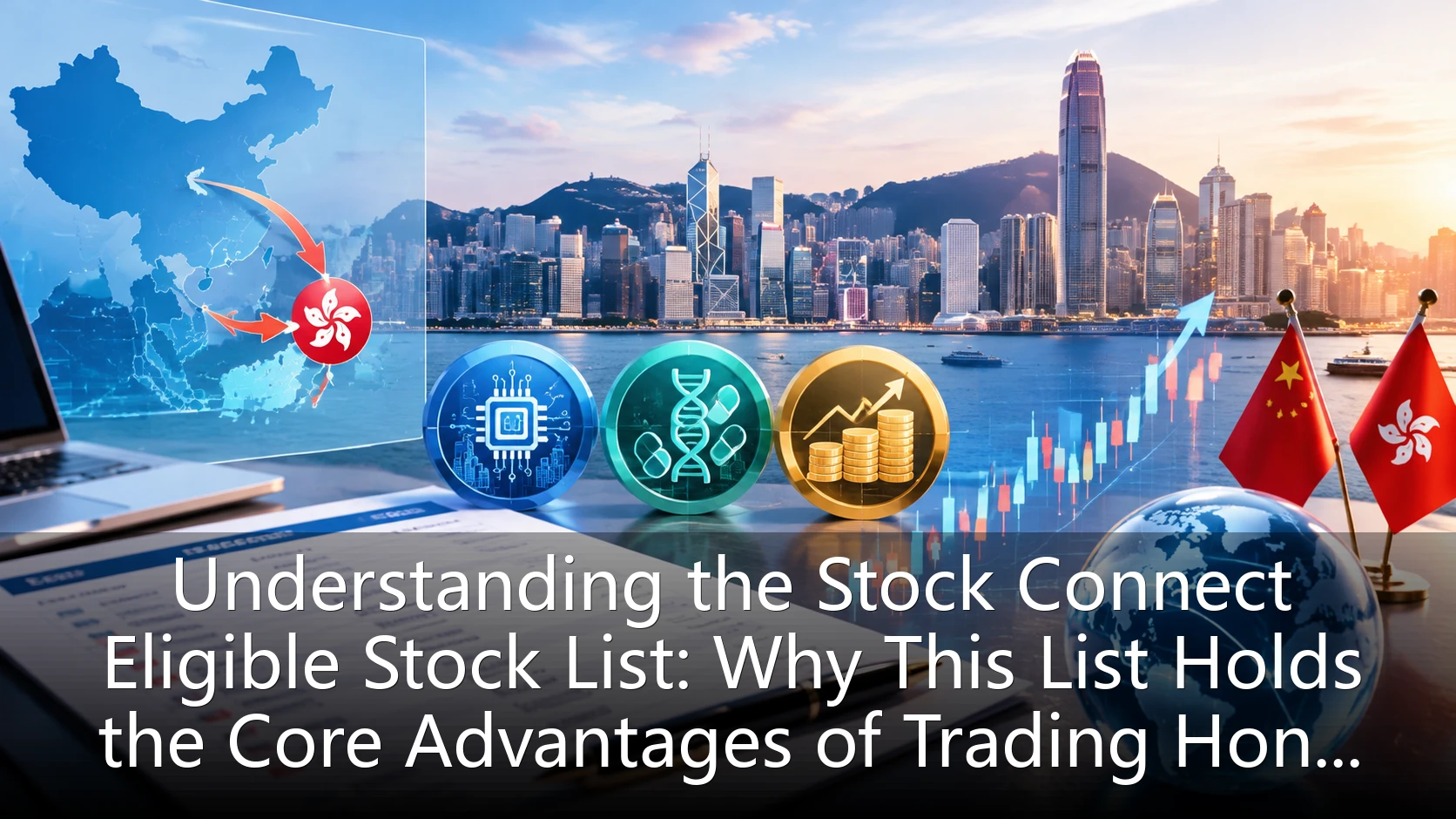
Understanding the Stock Connect Eligible Stock List: Why This List Holds the Core Advantages of Trading Hong Kong Stocks
2026-10-18
New Opportunities in HK Stock Investment: Why 2026 is Still the Golden Age for Trading HK Stocks?
2026-08-23