Stock Connect's 10th Anniversary: Connectivity Expands Further – Why Mainland Investors See Hong Kong Stocks as the 'First Stop for Going Global'
Stock Connect's 10th Anniversary: How Mutual Market Access Reshapes Mainland Asset Allocation
In November 2026, the Stock Connect program linking mainland China and Hong Kong capital markets will mark its 10th anniversary. Looking back from August 2026, this mechanism has not only fundamentally changed how mainland investors access international capital markets but also, amid today's complex global macro environment, highlights the irreplaceable role of Hong Kong stocks as the 'first stop for going global.' Recently, as Hong Kong Exchanges and Clearing Limited (HKEX) and mainland regulators signaled further optimization of the mutual market access mechanism during mid-year strategy meetings, discussions on 'why invest in Hong Kong stocks' have heated up once again. For mainland investors seeking diversified allocation and hedging against single-market risks, the advantages of Hong Kong stocks in valuation, dividends, and international diversification are converging at a historic resonance point.
II. Renewed Institutional Dividends: From 'Incremental Capital' to 'Pricing Power Shift'
The latest data shows that as of the end of July 2026, the cumulative net purchases of southbound funds for the year have surpassed the HK$600 billion mark, continuing the strong inflow trend of recent years. This sustained capital southward movement is not merely short-term arbitrage; it reflects mainland investors' gradual acquisition of pricing power in Hong Kong stocks. In the past, the Hong Kong stock market was predominantly priced by foreign institutions, leaving many high-quality mainland enterprises in a state of long-term undervaluation. With the continuous optimization of Stock Connect thresholds—including recent discussions on potentially further lowering the asset eligibility threshold for individual investors and expanding the trading universe to more small and medium-sized tech and biotech stocks—the influence of mainland capital in Hong Kong stocks has significantly increased. This 'pricing power shift' is a core reason why investors must pay attention to Hong Kong stocks. When mainland capital and foreign capital diverge on the valuation of the same asset, abundant southbound liquidity can often act as a catalyst for stock price recovery. For ordinary investors, this means no longer just passively following external volatility in the Hong Kong market, but participating in the value discovery process.
III. Valuation Trough and High Dividends: The 'Ballast' of Defensive Asset Allocation
Entering the second half of 2026, the global macro environment still faces uncertainties, with US tech stocks oscillating at high levels and A-shares experiencing structural market divergence. Against this backdrop, the valuation advantage of Hong Kong stocks is particularly prominent. Currently, the Hang Seng Index's price-to-earnings ratio remains at a historically low-to-mid level, and its price-to-book ratio is among the lowest of major global indices. This undervaluation provides investors with a natural margin of safety.
Even more critical is the high dividend characteristic of Hong Kong stocks. In the preferences of southbound funds, high-dividend blue-chip Hong Kong stocks have always held a significant position. Whether traditional financial and energy state-owned enterprises or Hong Kong-listed utility stocks, their dividend policies are generally generous and stable. In a low-interest-rate era, the high-dividend strategy of Hong Kong stocks offers investors a rare cash flow return. For long-term capital seeking absolute returns, Hong Kong stocks are not just a growth stock market, but also a 'dividend treasure trove' providing stable income.
IV. Scarce Targets and International Springboard: Capturing Opportunities Unavailable in A-Shares
Beyond valuation and dividend advantages, the most unique appeal of Hong Kong stocks lies in the scarcity of their targets. The Hong Kong market brings together a large number of internet platform giants, biotech leaders not listed in A-shares, and international consumer brands. These targets represent the most dynamic part of China's new economy, and their business models are often difficult to find direct counterparts in A-shares.
In 2026, with international giants like Saudi Aramco pursuing secondary listings in Hong Kong, the city's role as a bridgehead for 'absorbing global capital' has become increasingly solid. Mainland investors can allocate these high-quality global assets through Stock Connect without bearing the exchange rate conversion and legal compliance costs of direct overseas investment. At the same time, the linked exchange rate system pegging the Hong Kong dollar to the US dollar makes Hong Kong stocks a natural tool for hedging exchange rate fluctuations in RMB assets. In the process of RMB internationalization, holding Hong Kong stocks is equivalent to indirectly allocating some US dollar assets, which holds strategic significance for high-net-worth individuals and institutional investors in global asset allocation.
V. Practical Guide: How to Seize the Current Investment Window for Hong Kong Stocks?
At the 10th anniversary juncture of Stock Connect, the logic for investors to participate in Hong Kong stocks has become clear and firm. First, focus on the flow changes of southbound funds as a leading indicator for judging market bottoms; second, in sector selection, adopt a 'barbell' strategy: allocate high-dividend blue chips at one end as a defensive core, and select high-beta growth stocks such as tech internet and innovative drugs at the other end to capture excess returns. Additionally, with the expansion of the Stock Connect universe, investors should also pay attention to potential targets about to be included in the Stock Connect list, as they often bring liquidity premiums around the time of formal inclusion.
The Hong Kong stock market is not just an offshore market, but a bridgehead for Chinese assets to go global. On the 10th anniversary of Stock Connect, this door to the world is opening wider and wider. For mainland investors with an international perspective, this is undoubtedly a historic opportunity not to be missed.

Disclaimer: This article is for reference only and does not constitute investment advice. Investment involves risks, please invest cautiously.
Related Reading
Five Core Differences Between Hong Kong Stocks and A-Shares: From Hang Seng Index Trends to Trading Rules, Understand Why to Trade Hong Kong Stocks
2026-10-21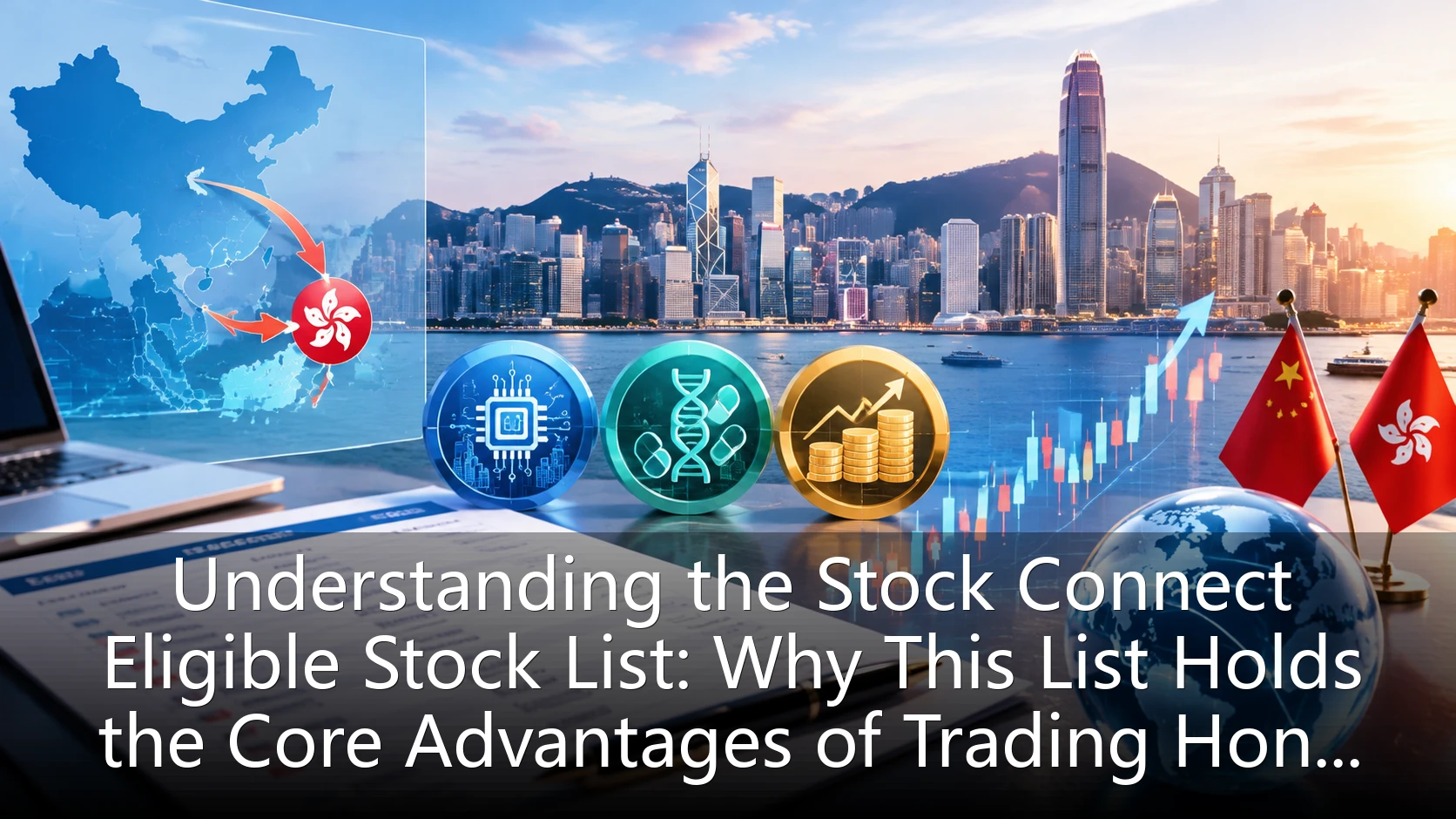
Understanding the Stock Connect Eligible Stock List: Why This List Holds the Core Advantages of Trading Hong Kong Stocks
2026-10-18
New Opportunities in HK Stock Investment: Why 2026 is Still the Golden Age for Trading HK Stocks?
2026-08-23